

May 2026
Virginia has over 60 species of orchids making it the state with the second most orchid species. You can see an Orchid bloom in every month of the year, somewhere in the state. About 45% of Virginia’s orchids are state-identified as Species of Special Concern, meaning they are rare or threatened in some way.
All native orchids are rare and habitat specific and should not be dug up and transplanted. They are dependent on mycorrhizal fungi for survival and removal of the orchid from the wild is futile. Orchids seeds are tiny and have no energy reserves. The germinating seed must be lucky enough to find a specific fungal partner in the soil to provide the nutrients it needs for growth.
We are fortunate in the Dragon Run Watershed to have as many as five orchids in bloom during May (depending on past and present weather). They include Southern Twayblade, Pink Lady Slipper, Large Twayblade, Puttyroot, and Large Whorled Pogonia.
The Southern Twayblade can bloom as early as March or as late as June. Found in seepage swamps and wet flatwoods associated with sphagnum moss, it has been observed to be quite sensitive to wetland disturbance. While appearing secure in Virginia, in more northern parts of its range, it is becoming rare.
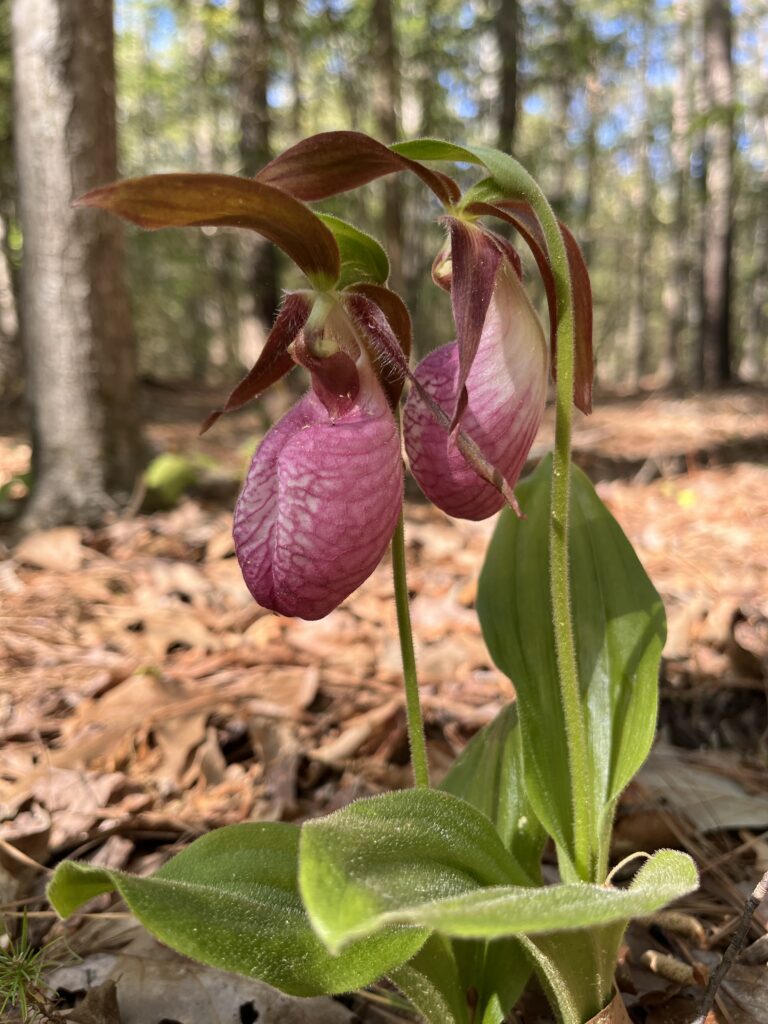
The Pink Lady’s Slipper is among the most common orchid in Virginia and certainly among the most recognizable with its large pink bloom. It blooms in April and May and we see it at our Big Island kayak launch site right now. It likes upland oak-pine forests and dry to moist soils. The plant is known to show blooms for 20 or more years.
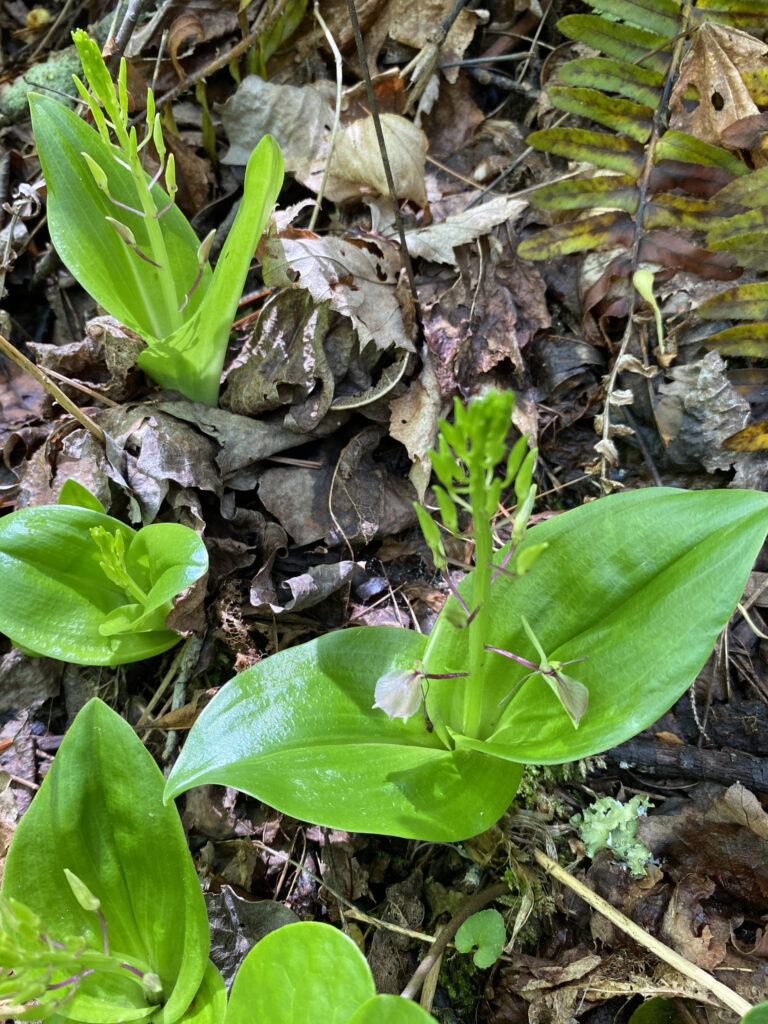
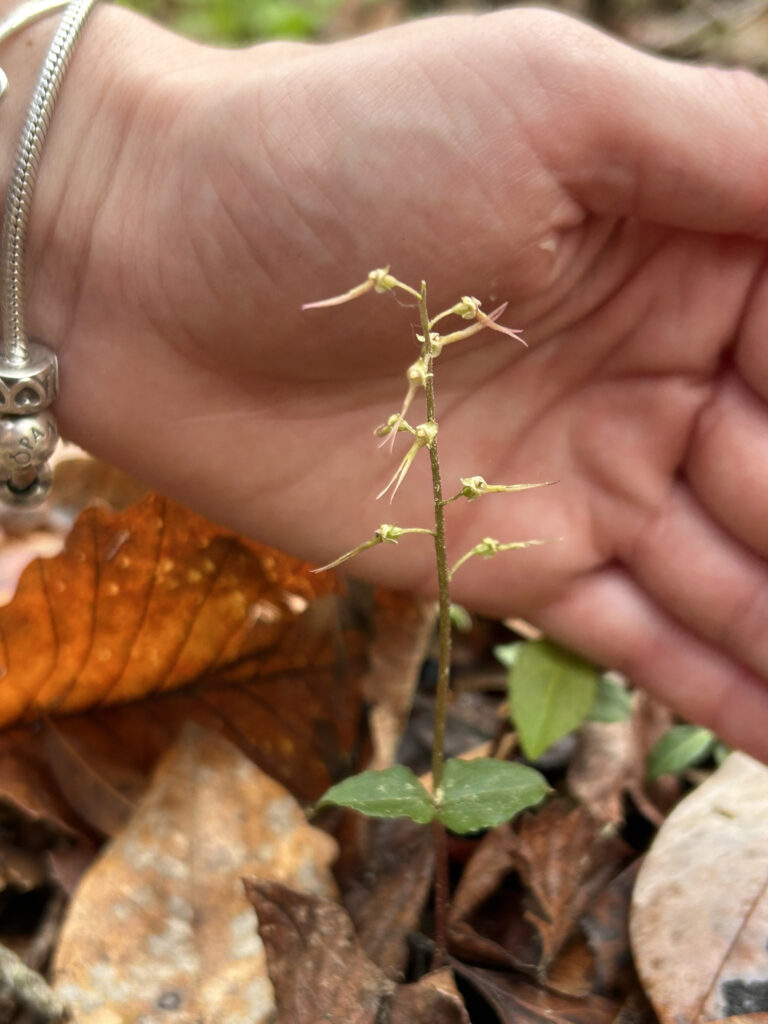
The Large Twayblade is an orchid of uplands or well drained floodplains and is relatively common in the proper habitat.
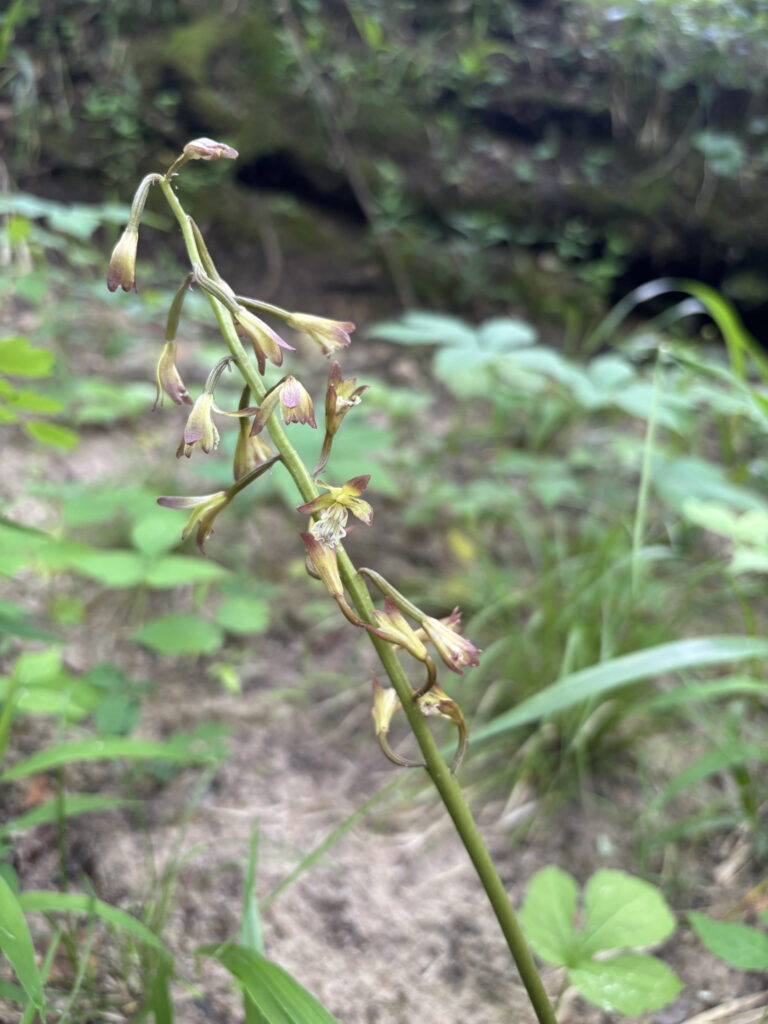
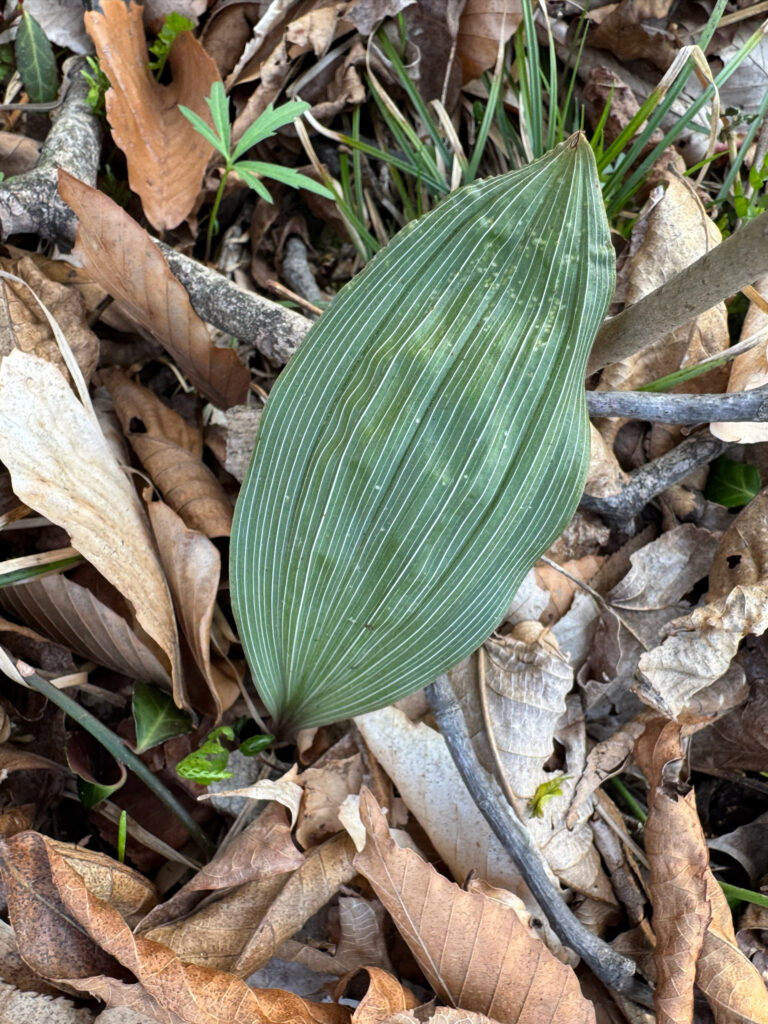
Puttyroot is a late May bloomer and more common in the mountains than the Coastal Plain but is reported in moist forests of the Dragon watershed. It is one of two orchids in our region that has overwintering leaf or leaves which disappears before the orchid flowers (the Crane-fly Orchid is the other winter leaf-bearing orchid). The bloom of Puttyroot is rare to find but small yet beautiful.
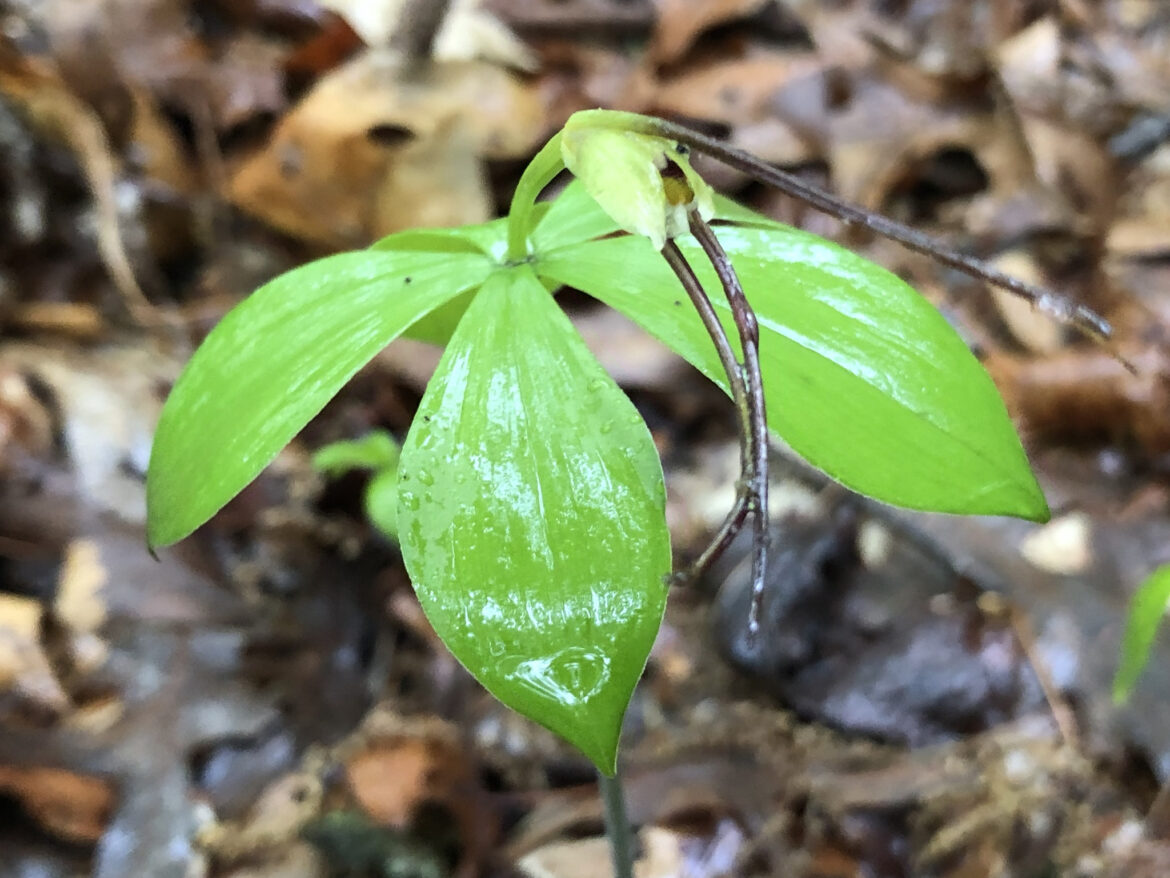
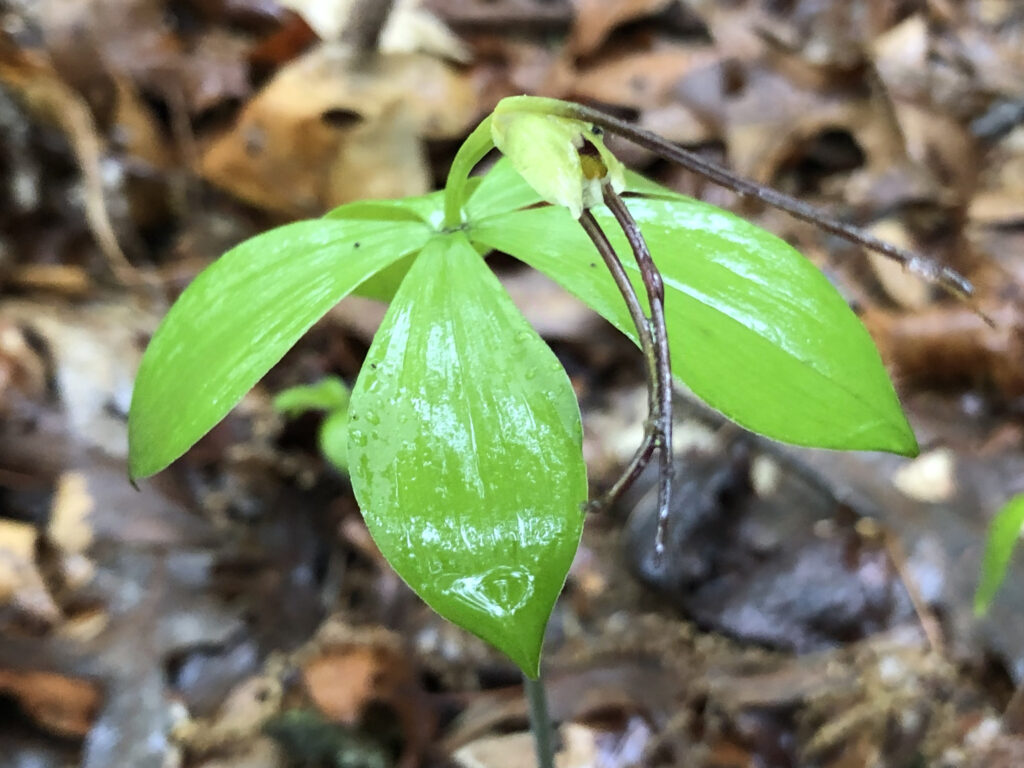
The Whorled Pogonia is rare and hard to find and see although it is found in all Virginia Counties. It generally occurs in oak-pine-heath forests – heaths are the blueberry family. It is distinctive with its five whorled leaves but can easily be confused with Cucumber Root but Pogonia has a thicker purplish stem while the Cucumber Root stem is thin, like wire, stem.
Now is the time to step out into the forests and look for Orchids. Adding a picture of them blooming to your photo library is a special reward.
Click on the photos below.
!