

May 2026
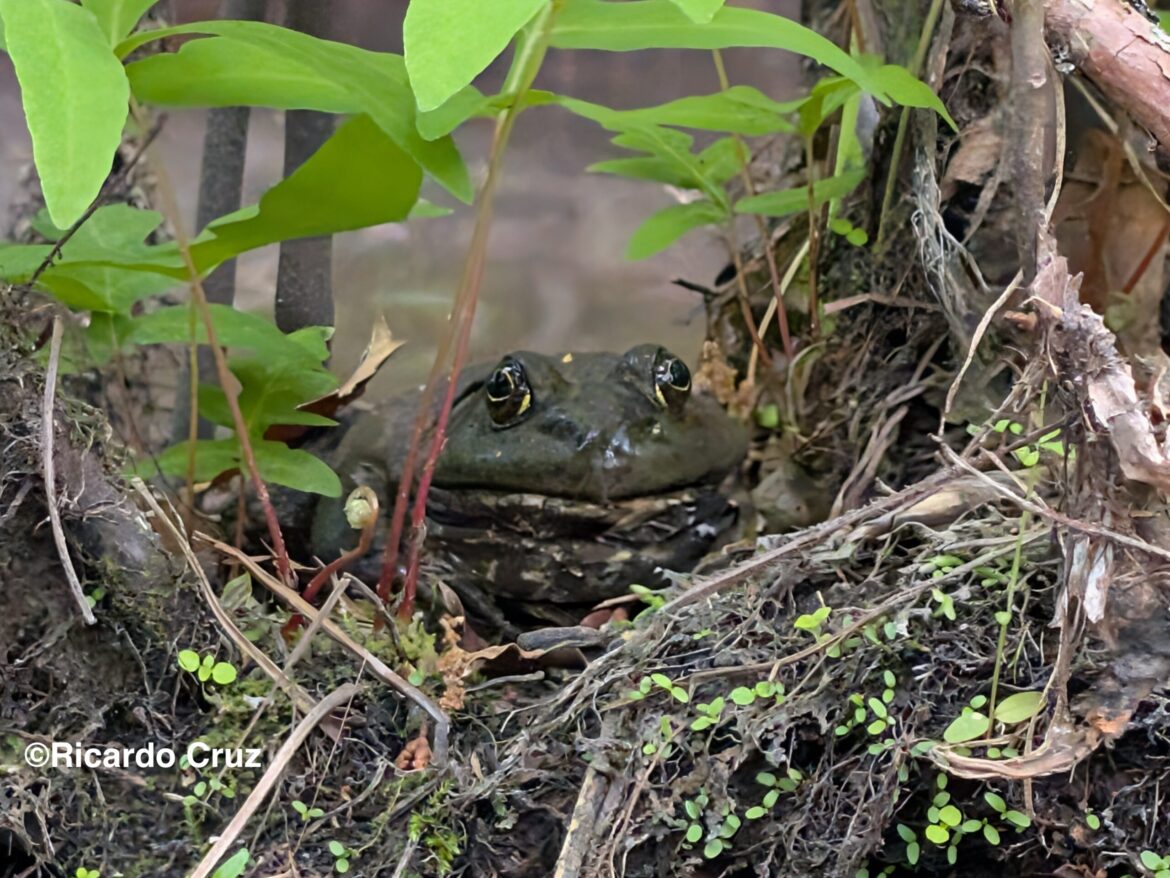
The American bullfrog , Lithobates catesbeianus, is the largest species of true frog (Ranidae) in North America. Their average length is 3.6 to 6 inches, and a mature individual can weigh more than a pound.
Males are larger than females and have a larger tympanum (external, circular eardrum located behind a frog's eye that transmits sound vibrations to the inner ear, allowing them to hear in air and water). The tympanum is used by the males in the production of their mating calls.
Bullfrogs are generalist carnivores, consuming a wide variety of prey including, rodents, small lizards and snakes, other frogs and toads, amphibians, crayfish, crustaceans, small birds and many types of invertebrates such as snails, worms, and insects. Unlike most species in the Ranidae family, the bullfrog’s diet includes a large percentage of aquatic species such as fish, tadpoles, ram's horn snails, and dytiscid beetles, as well as the aquatic eggs of fish, frogs, insects, or salamanders. In turn, they are eaten by predators such as river otters, snakes, fish, belted king fisher, herons, and eagles. The eggs and larvae are unpalatable to many salamanders and fish, but the high levels of activity of the tadpoles may make them more noticeable to a predator not deterred by their unpleasant taste.
The speed of a bullfrog's tongue strike is extremely fast (completing the strike and retrieval in approximately 0.07 seconds). The tongue is like a slingshot, pulled all the way back when the frog's mouth is closed. When the frog attacks prey, the act of opening its mouth releases the elastic force stored up in both the tongue and the jaw. The forces shoot the tip of the tongue toward the prey much faster than the prey's ability to see the strike and evade capture. Larger warm-blooded prey are usually pulled underwater and die of asphyxiation.
The American Bullfrog typically inhabits wetlands like the Dragon Run. We see and hear them often as we hike near the edge of the marsh and paddle the Dragon. The sound we hear, that of the males during breeding season, is much like the bellowing of a bull (which is how the frog got its name). The bullfrog breeding season in Virginia typically occurs from late May through August, peaking in early summer. After mating, the female chooses a site in shallow water among vegetation and lays a batch of 1,000 to 40,000 eggs. Their maximum lifespan in the wild is estimated to be 8 to 10 years.
So, next time you are near the water’s edge and hear the sound of the bullfrog, you will know that that these big boys are hoping to attract a female. That sound marks the beginning of new life in the wetland, a process that sustains food sources, regulates populations, and ultimately supports the intricate web of life and ecological balance.
 Sound of the bullfrog: https://macaulaylibrary.org/asset/640526452