March 2026
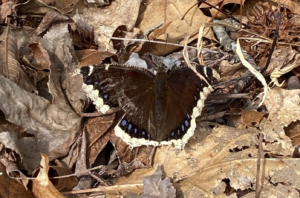
It’s a sign of good things to come when you see your first butterfly of the season. My first this year is February. I’m walking on FODR’s newest property (the 641 acre Farley Park Tract) as a property monitor. There are remnants of snow; but, the winter sunshine provides a tiny hint of spring. We are scaling the “mountains of Middlesex County” (107ft above sea level) when I see a morning cloak flying on the edge of the forest. It’s taking advantage of the warm day and the sun.
The morning cloak is one of the earliest butterflies we see as we emerge from winter. It survives the winter by hibernating as adults in sheltered, dry spots, often choosing under loose tree bark, inside tree cavities, or in woodpiles. They are freeze-tolerant, relying on glycerol in their bodies as antifreeze, allowing them to withstand extreme temperatures.
This species can live ten to eleven months, making it the longest-lived butterfly in the Dragon Run Watershed. Their favorite foods are carrion and tree sap (often made available by the yellow bellied sapsucker). The range of this butterfly runs from North America south of the tundra to central Mexico. Their habitat is primarily hardwood forests.
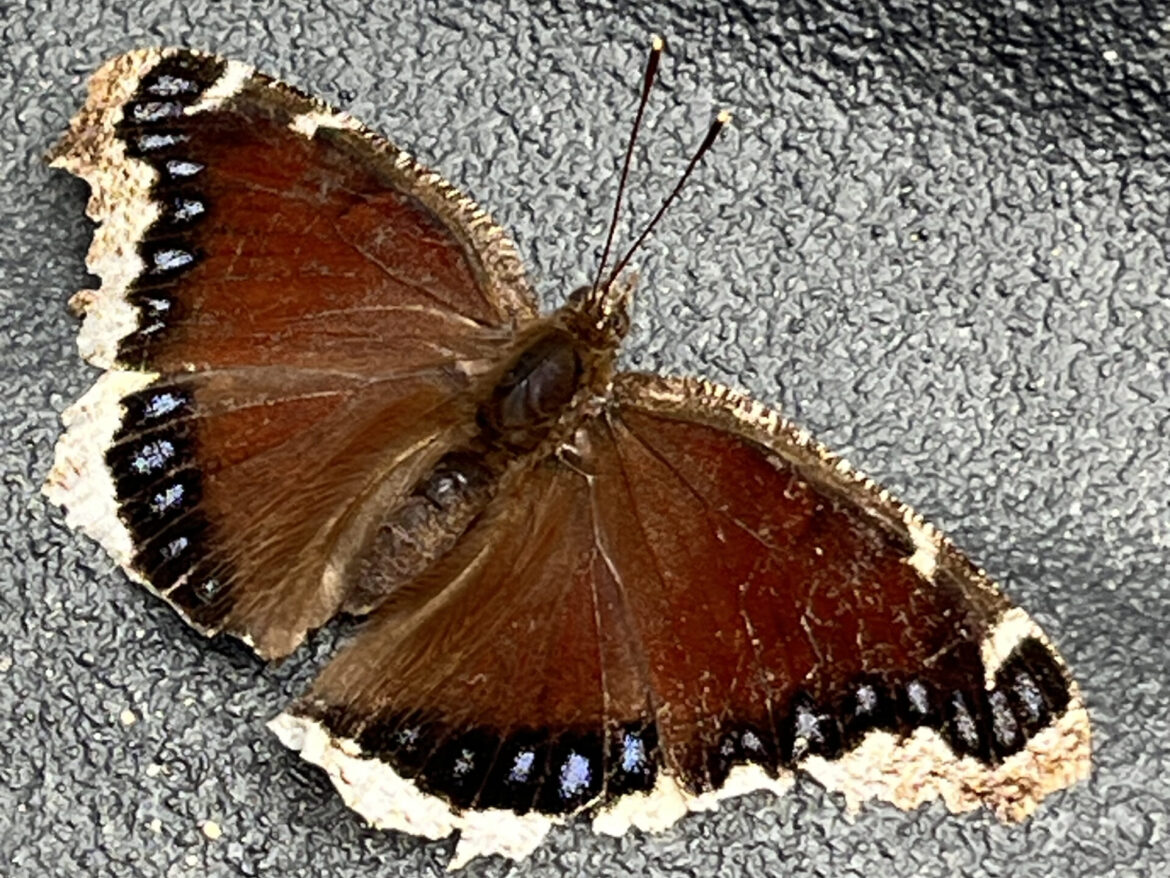
The Mourning Cloak get their name from the resemblance of their wings to the dark, somber capes or cloaks historically worn by individuals in mourning. They are dark brown, have distinct yellow border on the edge of their wings as well a series of blue interior dots on the wings.
Now about that mountain where we found the Mourning Cloak, the male butterflies of this species are hill-toppers. They often perch or hang out on a hilltop where they have the best vistas to find females. After enduring the winter months, they are awakening from “hibernating” and need to mate before they die. Eggs, caterpillars, and eventually the next generation of the mourning cloak emerges by late spring. The life cycle continues.
Butterflies in there early months are called “fresh” and in their final months are called “worn.” But though worn, faded, ragged, and near the end of life the mourning cloak continues to dazzle us on the most unlikely days. They remind us that Spring will be here soon and those groundhogs who saw their shadow got it wrong.