
April 2026
In two earlier FODR editions of “Swamp Sightings”, I wrote about two groups of salamanders we have on in and around Dragon Run - Seasonal Wetland species and Stream and Seep species. A third group of salamanders in Virginia are the Forest Terrestrial species. As you might guess from the name, these are salamanders spending their life on forested lands.
Of the 66 species of salamanders in Virginia, 21 are considered Forest Terrestrial species. These are mostly small, moisture-dependent and are entirely terrestrial in contrast to all other salamanders which require aquatic systems for breeding. These forest species live and breed on land. Their eggs are laid on land in moist habitats such as in burrows, under rocks or logs and the young have no aquatic larval stage. The other three salamander groups, many of which live on land as adults, all have aquatic larvae.
For you science types, these terrestrial salamanders are in the family, Plethodontidae and are referred to as Lungless Salamanders. That is descriptive because they do, in fact, lack lungs, breathing through their skin and the tissues in their mouth. This is a unique adaptation, and they are the only vertebrates that can respire through their skin. Needless to say, they require a moist habitat to survive although research has found the in times of low oxygen (hypoxia) they will lower their metabolism and survive.
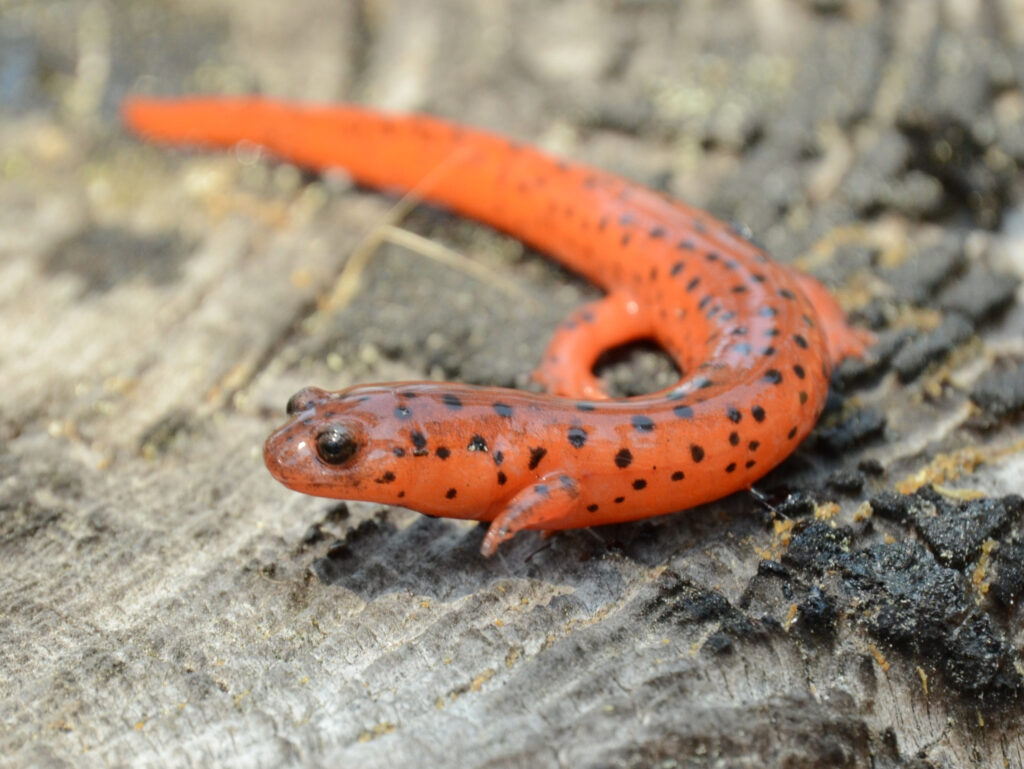
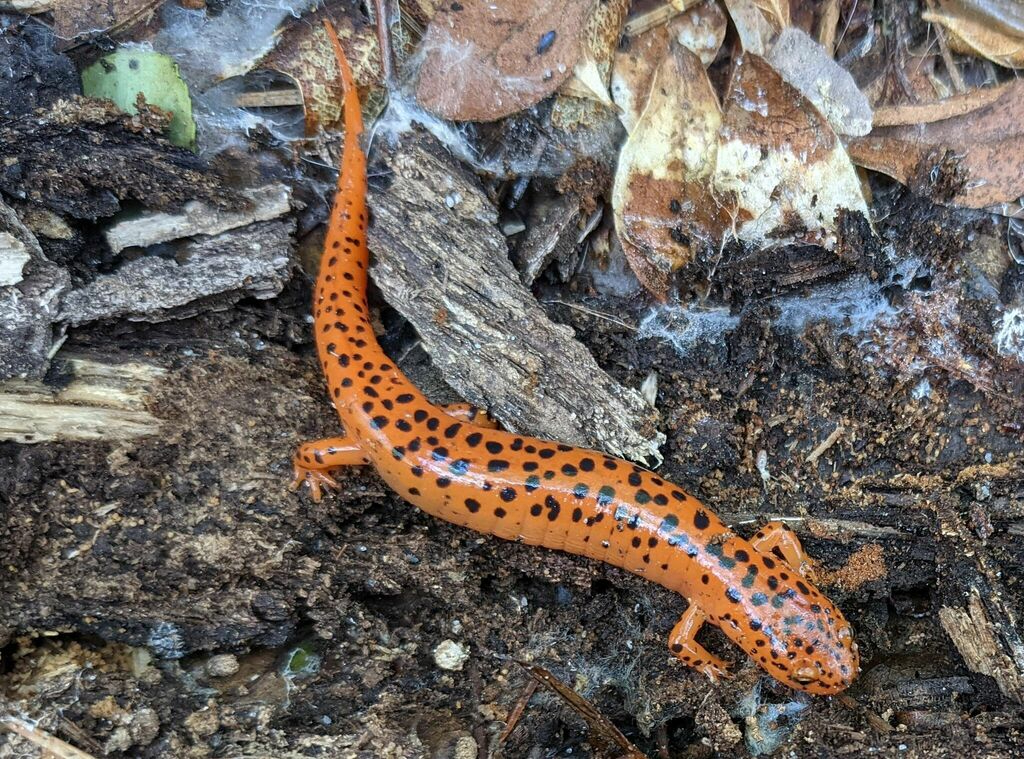
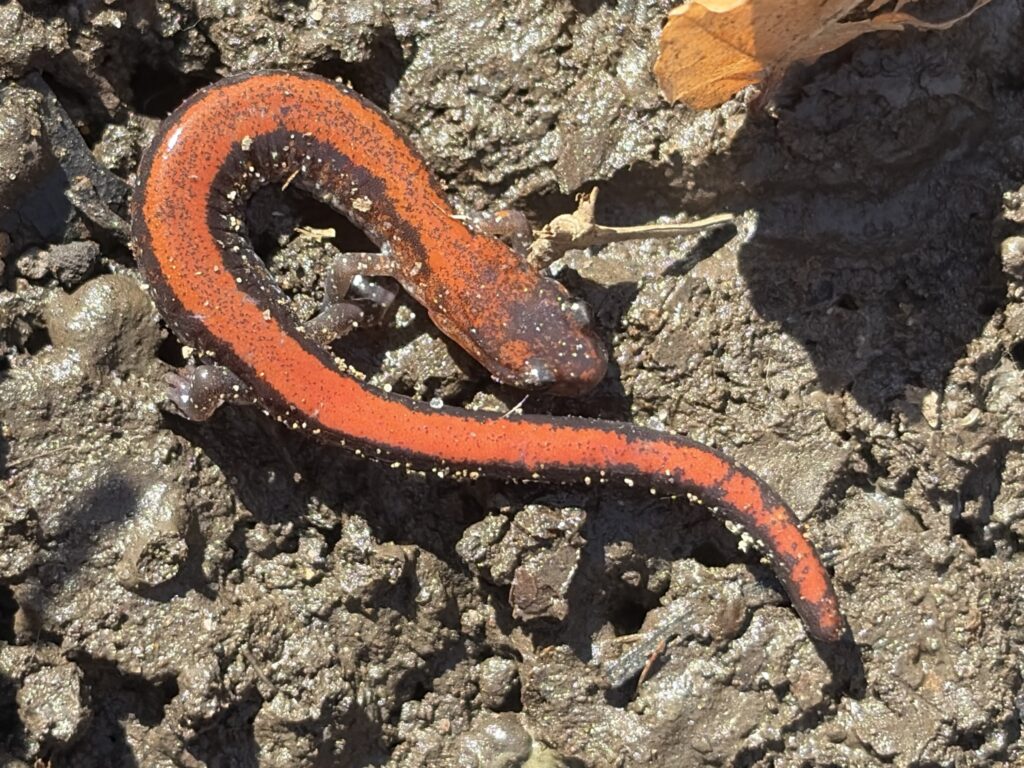
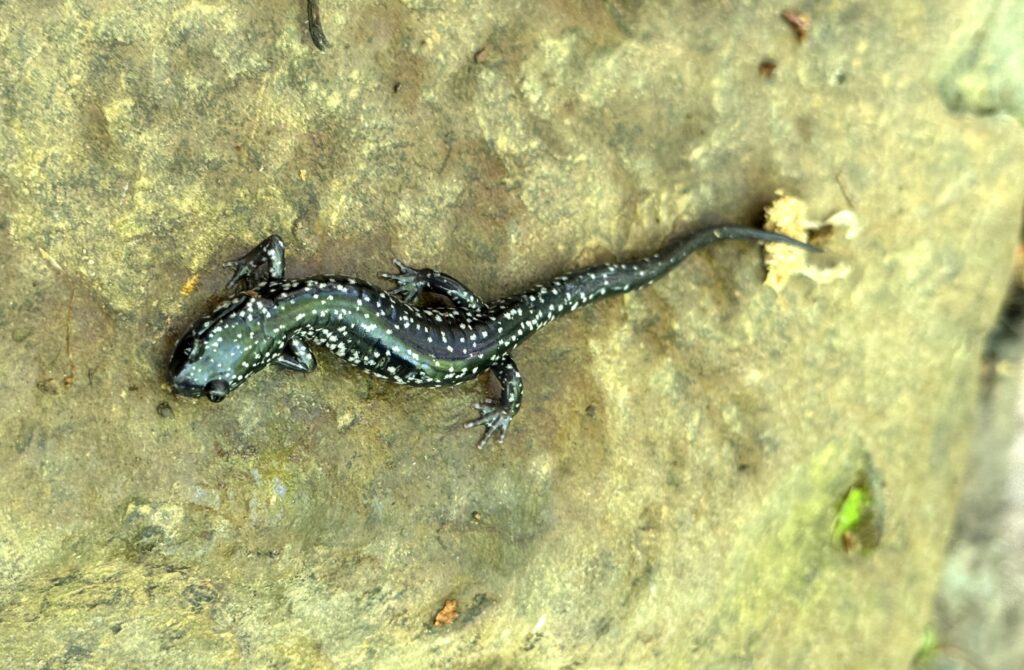
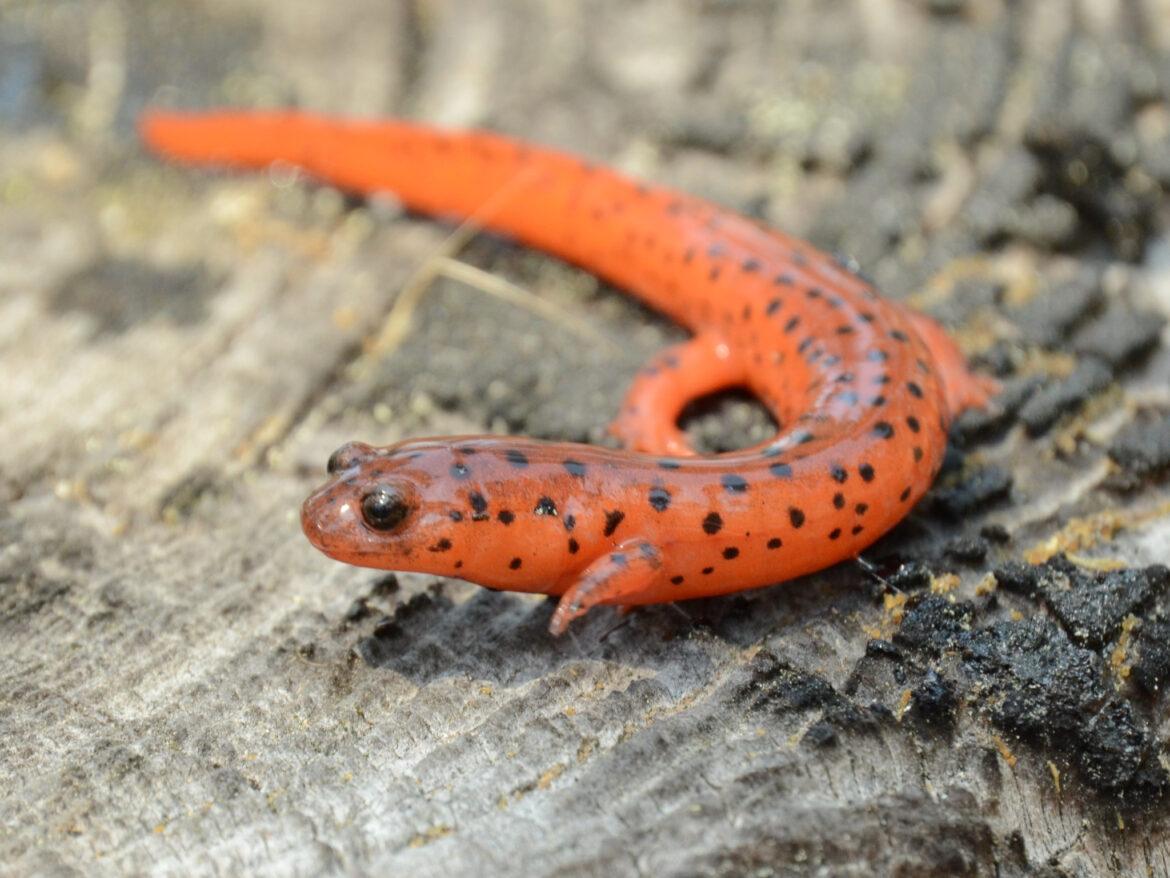
These lungless salamanders are predators on any invertebrates they can fit in their mouth and are particularly abundant in the Southeast U.S., such that Virginia is considered a “hotspot” of lungless salamander speciation. In our region of the Middle Peninsula, we have four species that may be found – the Eastern Red-backed Salamander, Eastern Mud Salamander, the White Spotted Slimy Salamander and the Northern Red Salamander (Virginia’s State Salamander). The other 17 Virginia forest terrestrial salamanders are found in the mountains, and most are rare and have a very limited range.
The most well studied and most widespread of this group is the Eastern Red-backed. This salamander is abundant throughout most of Virginia and much of eastern U.S. Research has suggested this species is a “keystone” species. This means that it is so critical to the ecological community in which it lives that if it is removed, that community structure and diversity will substantially change. Why is that? For one thing it is super abundant, with a recent scientific study (2024) showing densities ranging from 390 and 6,920 individuals per acre! Further, these 3–5-inch-long salamanders feed on anything that moves, occupying a niche that few other forest organisms occupy. Personally, I have found six of these critters under a single six-foot-long decaying log. Just an FYI, woodpeckers and beavers are also “keystone” species. In a future article, I will write about the fourth group of salamanders, the Fully Aquatic species.
Click on the photos.